WHAT IS RSV
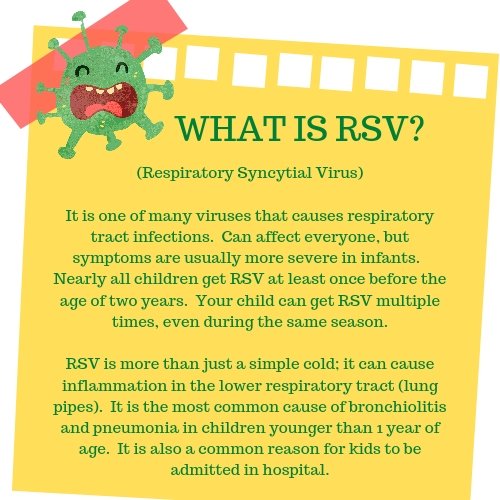
(Respiratory Syncytial Virus) It is one of many viruses that causes respiratory tract infections. Can affect everyone, but symptoms are usually more severe in infants. Nearly all children get RSV at least once before the age of two years. Your child can get RSV multiple times, even during the same season. RSV is more than just a simple cold; it can cause inflammation in the lower respiratory tract (lung pipes). It is the most common cause of bronchiolitis and pneumonia in children younger than 1 year of age. It is also a common reason for kids to be admitted in hospital.
RSV SYMPTOMS
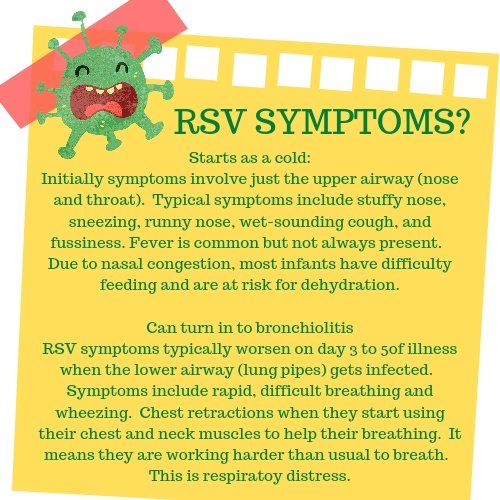
Starts as a cold: Initially symptoms involve just the upper airway (nose and throat). Typical symptoms include stuffy nose, sneezing, runny nose, wet-sounding cough, and fussiness. Fever is common but not always present. Due to nasal congestion, most infants have difficulty feeding and are at risk for dehydration. Can turn in to bronchiolitis RSV symptoms typically worsen on day 3 to 5of illness when the lower airway (lung pipes) gets infected. Symptoms include rapid, difficult breathing and wheezing. Chest retractions when they start using their chest and neck muscles to help their breathing. It means they are working harder than usual to breath. This is respiratoy distress.
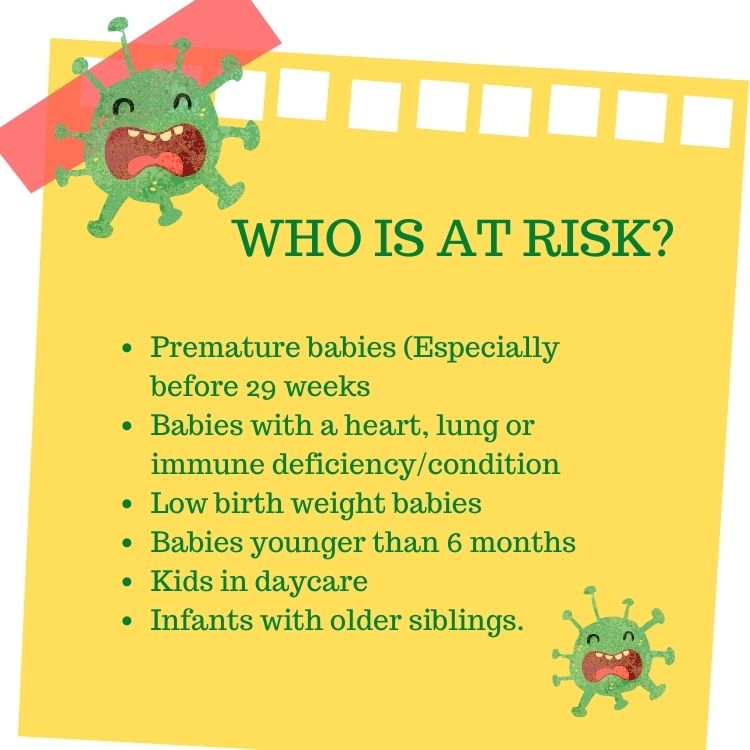
WHO IS AT RISK
Premature babies (Especially before 29 weeks Babies with a heart, lung or immune deficiency/condition Low birth weight babies Babies younger than 6 months Kids in daycare Infants with older siblings.
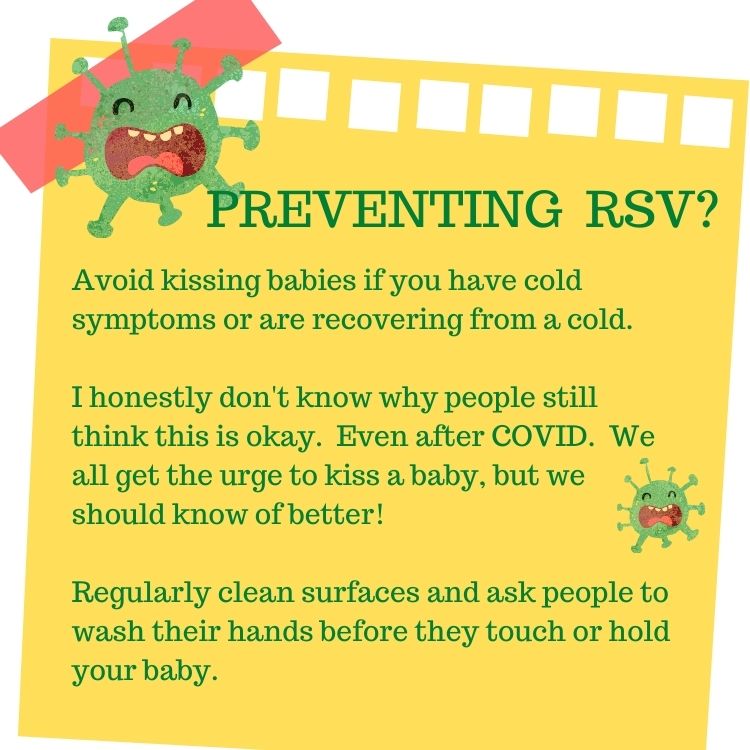
PREVENTING RSV
Avoid kissing babies if you have cold symptoms or are recovering from a cold. I honestly don’t know why people still think this is okay. Even after COVID. We all get the urge to kiss a baby, but we should know of better! Regularly clean surfaces and ask people to wash their hands before they touch or hold your baby.
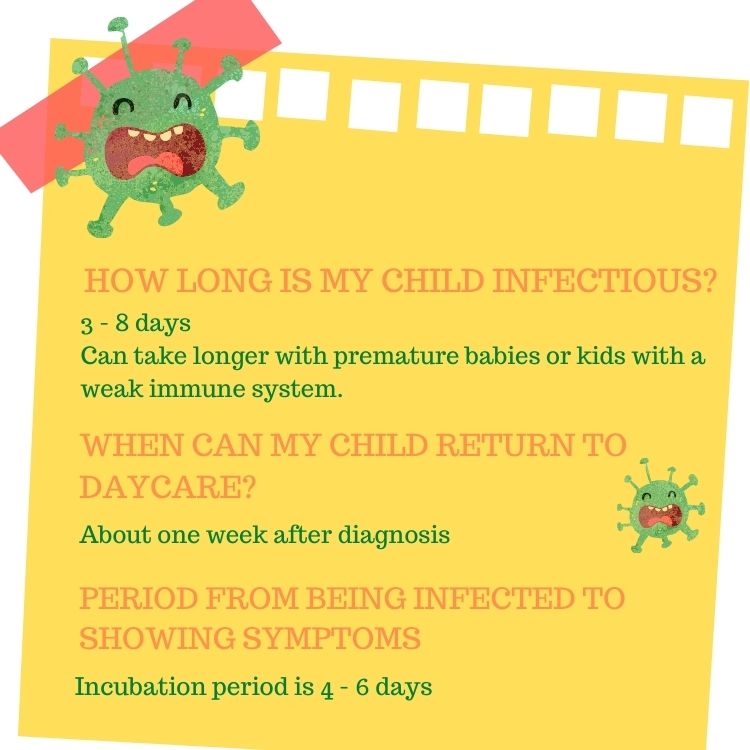
HOW LONG IS MY CHILD INFECTIOUS?
3 – 8 days Can take longer with premature babies or kids with a weak immune system.
WHEN CAN MY CHILD RETURN TO DAYCARE?
About one week after diagnosis
PERIOD FROM BEING INFECTED TO SHOWING SYMPTOMS
Inubation period is 4 – 6 days
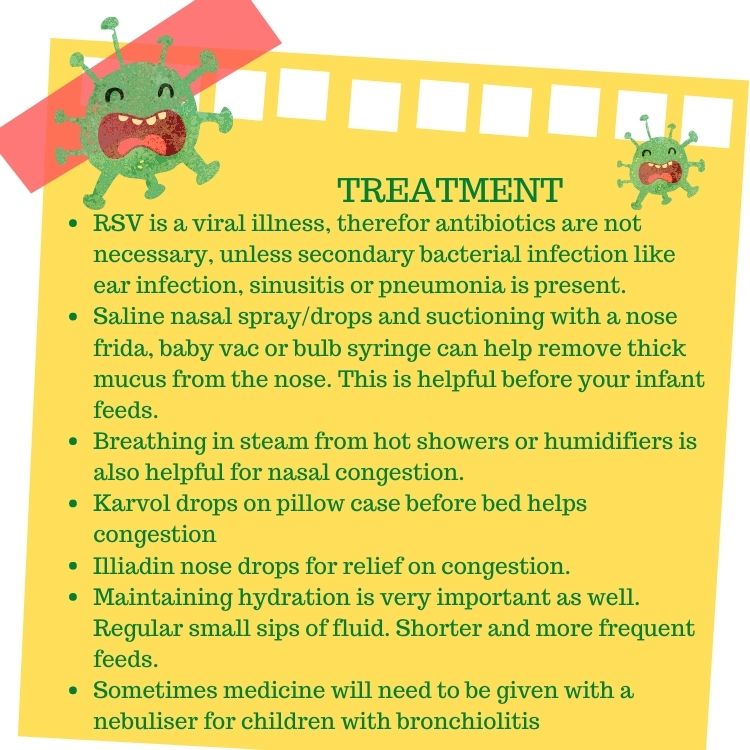
TREATMENT
RSV is a viral illness, therefor antibiotics are not necessary, unless secondary bacterial infection like ear infection, sinusitis or pneumonia is present. Saline nasal spray/drops and suctioning with a nose frida, baby vac or bulb syringe can help remove thick mucus from the nose. This is helpful before your infant feeds. Breathing in steam from hot showers or humidifiers is also helpful for nasal congestion. Karvol drops on pillow case before bed helps congestion Illiadin nose drops for relief on congestion. Maintaining hydration is very important as well. Regular small sips of fluid. Shorted and more frequent feeds. Sometimes medicine will need to be given with a nebuliser for children with bronchiolitis
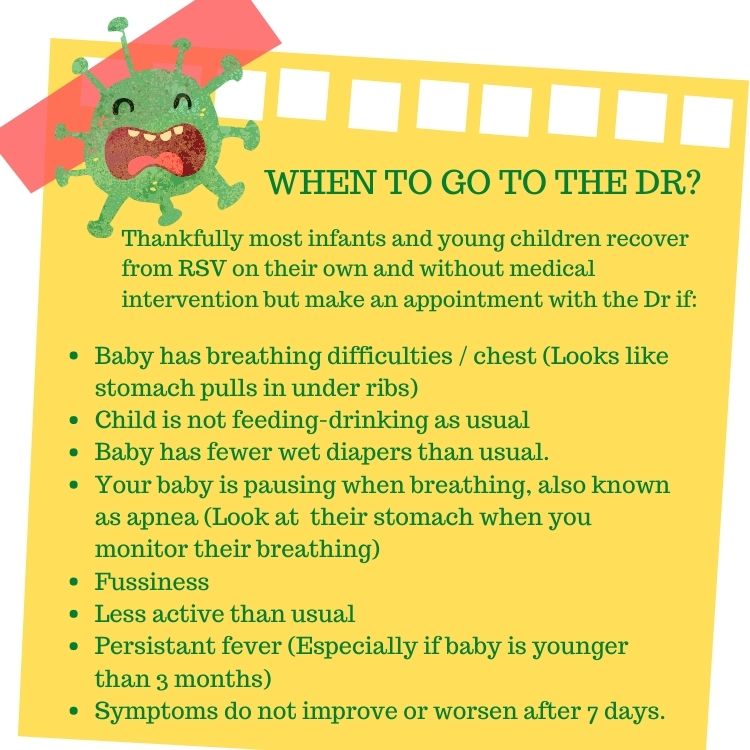
WHEN TO GO TO THE DR?
Thankfully most infants and young children recover from RSV on their own and without medical intervention but make an appointment with the Dr if:
Baby has breathing difficulties / chest (Looks like stomach pulls in under ribs) Child is not feeding-drinking as usual Baby has fewer wet diapers than usual. Your baby is pausing when breathing, also known as apnea (Look at their stomach when you monitor their breathing) Fussiness Less active than usual Persistant fever (Especially if baby is younger than 3 months) Symptoms do not improve or worsen after 7 days.
Please note I am not a doctor. This is not a medical or professional oppinion. This is just a post I put together to help and give other moms a little bit more information on RSV. As I recently discovered that a lot of moms do not even know about RSV.
 Flawsome Boneschans